The 60-second method
Check the serving size first, then calories, then scan sodium, saturated fat, added sugar and protein. Finally, add sauces, sides and drinks.
Use % Daily Value (%DV) to judge each number without memorizing anything:
Why reading the label pays off
Two items that look alike on a menu can differ by hundreds of calories, or by more than half a day’s worth of sodium. A grilled sandwich and a crispy one, a small side and a large one, a plain drink and a sweetened one: the difference is in the nutrition information, not in the photo.
Reading it does not mean you must eat a certain way. It lets you choose with your eyes open, whether you want to fit a calorie target, get more protein, or keep an eye on salt and sugar.
Read a label in 6 steps
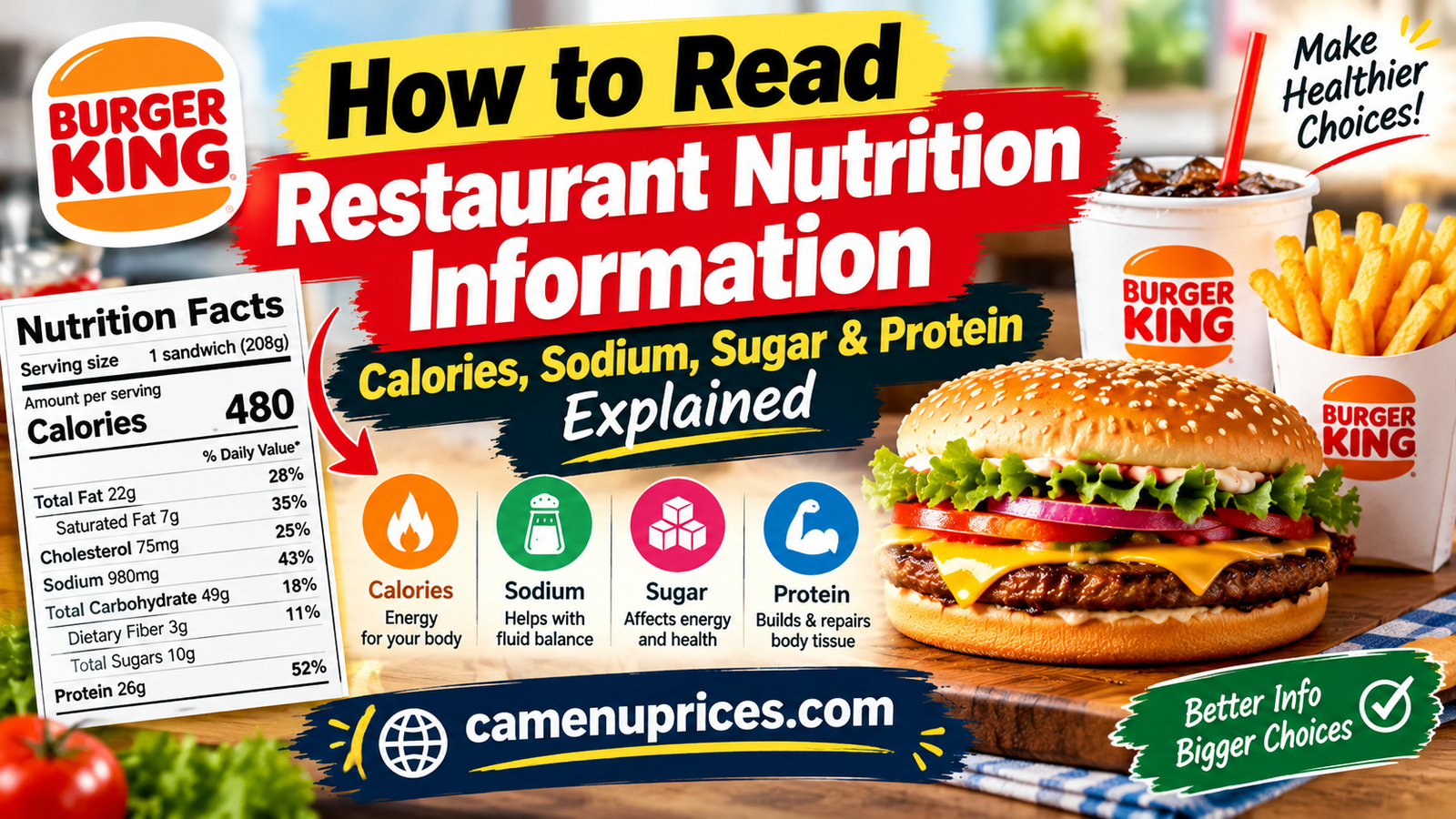
The sample below is a made-up chicken sandwich, created only to explain the layout. It is not a real product. The numbered circles match the steps.
Nutrition Facts
- Serving size. Everything else on the label refers to this amount. If you eat two servings, double every number.
- Calories. This is the energy in one serving. Compare it with the meal size you are aiming for.
- Sodium. Restaurant food can be high in sodium. In the sample, 46% of the daily value in one sandwich is a lot before you add fries.
- Total and saturated fat. Fat is calorie-dense, and saturated fat is the part many health guidelines suggest limiting.
- Added sugars. These come from sweeteners added in preparation, such as sauces, buns and drinks.
- Protein. Useful if you want a filling meal or you are tracking protein for training.
What % Daily Value tells you
%DV compares one serving with a daily reference amount, based on a 2,000 calorie diet. It is a general reference, not a personal target. These are the reference amounts most labels use:
| Nutrient | Daily reference | Aim for |
|---|---|---|
| Sodium | 2,300 mg | Lower %DV is usually better |
| Saturated fat | 20 g | Lower %DV is usually better |
| Added sugars | 50 g | Lower %DV is usually better |
| Dietary fiber | 28 g | Higher %DV is usually better |
| Protein | No %DV on most labels | Depends on your goals |
Try it: turn grams into %DV
Type the numbers from any menu item. The values start with the sample sandwich.
Check the calorie math
Calories on a label come from three nutrients: fat has 9 calories per gram, and carbohydrates and protein each have 4. Multiplying lets you see where an item’s calories come from and catch a typo in a table.
In the sample sandwich: 22 g fat x 9 = 198, 44 g carbs x 4 = 176, and 28 g protein x 4 = 112. That adds up to 486 calories, close to the 480 shown. Small differences are normal because labels round their numbers.
Try it: estimate calories from grams
Unit and serving traps
Most reading mistakes come from a mismatch in units, not from the nutrition itself. Watch for these three:
- Per 100 g vs per serving. Some labels list values per 100 g. Multiply by your portion weight and divide by 100.
- Calories vs kilojoules. One kilocalorie (kcal) is about 4.184 kilojoules (kJ). If a label shows only kJ, divide by 4.184.
- Sodium vs salt. Labels list sodium. Salt is about 2.5 times heavier, so 1,000 mg of sodium is roughly 2.5 g of salt.
Quick converters
Compare two orders
These two orders are hypothetical and use round numbers to show how the addition works. They are not taken from any restaurant.
Order A
- Sandwich: 480 kcal
- Large fries: 430 kcal
- Sweet drink: 220 kcal
Order B
- Same sandwich: 480 kcal
- Side salad, light dressing: 120 kcal
- Water: 0 kcal
Same main item, but a difference of 530 calories. Neither order is right or wrong: the point is that the choice becomes visible once you add the lines up.
Turn a daily number into a meal budget
If you already know your daily calorie reference, you can split it across the day before you look at a menu. One common way is to give breakfast about a quarter, lunch and dinner about 30% each, and keep the rest for snacks and drinks. It is a starting point, not a prescription.
Try it: split your day
Common myths, checked
Myth: grilled is always the lighter choice.
Reality: Grilled is often lower in fat than crispy, but marinades, glazes, cheese and sauces can change the total. Check the numbers.
Myth: a salad is always low in calories.
Reality: Toppings such as fried chicken, cheese, nuts and creamy dressing can make a salad calorie-heavy. Look at it with the dressing included.
Myth: zero sugar means zero calories.
Reality: A drink can have no sugar and still contain calories from other ingredients. Read the calories line.
Myth: bigger protein numbers are always better.
Reality: Protein per calorie matters too. A very large item can have plenty of protein and also plenty of calories and sodium.
Myth: “no added sugar” means low sugar.
Reality: Fruit, milk and sauces contain natural sugars. Compare total carbohydrate and sugars, not just the added line.
Myth: a small portion is always a small serving.
Reality: Menu sizes and label serving sizes are not always the same. Confirm what one serving means for that item.
Your before-you-order checklist
0 of 6 checked
Glossary
- Calorie (kcal)
- A unit of energy. On food labels, “calories” means kilocalories.
- Kilojoule (kJ)
- The metric unit of energy used on labels in many countries. One kcal is about 4.184 kJ.
- Serving size
- The standard amount that all numbers on the label describe.
- % Daily Value
- How much a serving contributes to the daily reference amount of a nutrient.
- Sodium
- The part of salt that is tracked on labels, measured in milligrams.
- Saturated fat
- A type of fat found in animal products and some oils; many guidelines suggest limiting it.
- Added sugars
- Sugars added during preparation, separate from sugars naturally in food.
- Macronutrients
- The three nutrients that provide calories: fat, carbohydrate and protein.
Frequently asked questions
What is a good calorie number for one restaurant meal?
There is no single right number. Many people use 2,000 calories a day as a general reference, so a main meal often falls somewhere between 500 and 800 calories, but your needs depend on your age, body size, activity and goals.
What does % Daily Value mean?
It shows how much one serving contributes to a nutrient’s daily reference amount, based on a 2,000 calorie diet. As a quick guide, 5% or less is low and 20% or more is high.
Why are the calories on the label different from my own math?
Labels round numbers and use standard calculation methods, so small differences of a few percent are normal. Large differences usually mean the serving size or the item you are comparing is different.
Do sauces and drinks count?
Yes. Sauces, dressings, toppings and drinks are often listed separately, so add them to your main item to see the full meal total.
Are restaurant nutrition numbers exact?
They are estimates for a standard recipe and portion. Preparation, portion size and ingredient changes can make your actual meal differ.
What is the difference between sodium and salt?
Labels list sodium in milligrams. Salt is about 2.5 times the sodium weight, so 1,000 mg of sodium is roughly 2.5 g of salt.
How many calories are in a kilojoule?
One kilocalorie (kcal, the food-label calorie) equals about 4.184 kilojoules (kJ). Some countries show kJ, so divide by 4.184 to get calories.
About this guide
This guide was written by the camenuprices.com editorial team to explain nutrition information in plain language. The sample label and the two orders are illustrations we created, and they do not describe any real product. The %DV reference amounts follow the U.S. FDA Nutrition Facts label, and the energy and salt conversions are standard factors. For official numbers, always use the restaurant’s own nutrition page. Found a mistake? Please tell us through our Contact page and we will review it.
Update log: September 30, 2026. Added the %DV calculator, unit converters, meal budget planner, two more myths and two more FAQs, and rebuilt the layout for phones.
This article is for general education only and is not medical, dietary or financial advice. It is not affiliated with any restaurant brand. Nutrition rules and values vary by country and change over time.